
Okay, so check this out — browser extension wallets are everywhere now. Wow! They make DeFi usable for normal people. But that convenience comes with trade-offs, and my instinct said “something felt off” the first time I saw someone paste a seed phrase into a random popup. Seriously?
Short story: browser wallets are attack magnets. Medium story: phishing, malicious web3 sites, approval spam, and subtle social-engineering tricks live in the same browser session where your keys are unlocked. Long story — and this is the messy part — your browser is a busy place with dozens of extensions, trackers, and web pages that can script interactions in ways that are hard to reason about unless you slow way down and look at call stacks and RPC flows.
I’ll be honest, I’m biased toward wallets that treat UX and security as equal citizens. Hmm… initially I thought all extension wallets were roughly the same, but then I started testing transaction flows, permission screens, and cross-origin behaviors — and some wallets failed the “doesn’t surprise me” test pretty badly. Actually, wait—let me rephrase that: many wallets present an okay surface, but under pressure they reveal design choices that make exploits easier.
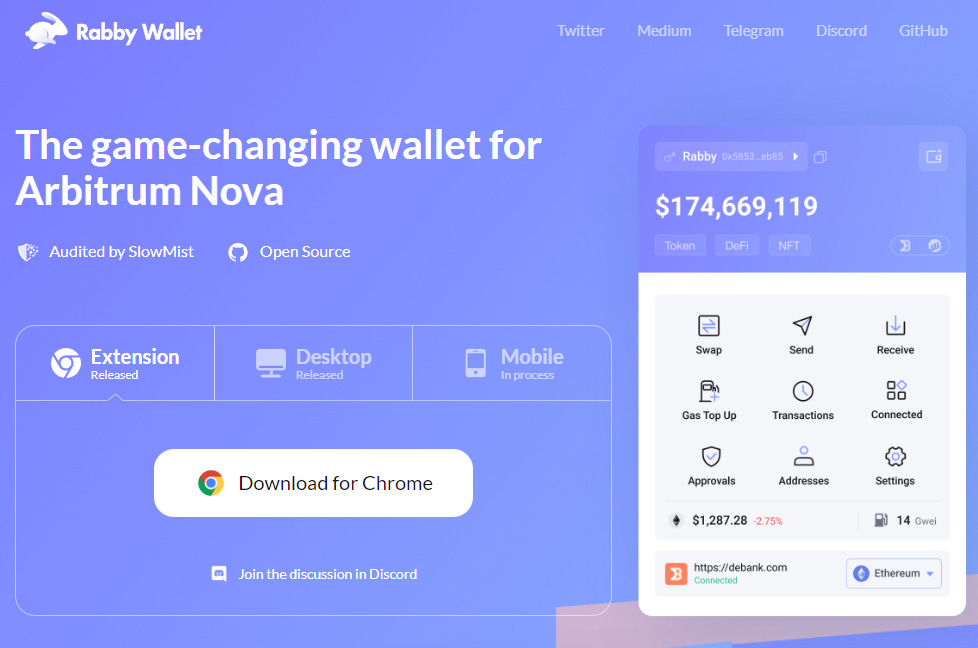
How Rabby wallet changes the calculus (and where to get it)
Check this out — Rabby doesn’t try to be the prettiest app; it cares about predictable behavior, clearer approval UX, and defense-in-depth. Whoa! It separates signing from approving, surfaces origin clearly, and offers built-in guardrails against approval requests that are unusually broad or long-lived. If you want to try it, here’s the safe download page: https://sites.google.com/cryptowalletextensionus.com/rabby-wallet-download/
Why that matters: many users blindly click “Connect” then later realize they’ve given a dApp blanket permission to move tokens forever. Short sentence. That forever-approval pattern is an easy exploit vector. Medium sentence explaining further: attackers can trick users into approving a bad contract; then the contract pulls funds via allowance without any further prompts. Longer thought — and this is where the product design really counts — if your wallet makes it hard to manage allowances or hides approval metadata, you will lose funds because users will ignore complex prompts.
Here’s what bugs me about common advice: people say “only install from the store” like that’s enough. It’s not. Wow! The Chrome Web Store is safer than a random file, though actually some malicious extensions make it past review. My instinct said “double-check everything” and that turned out to be good advice. I’m not 100% sure which checks will always catch a bad actor, but permissions and publisher reputation are solid starting points.
On one hand, browser extensions need deep APIs to work (they must sign, they must watch, they must call RPC). On the other hand, those same APIs are the attack surface. Initially I thought limiting APIs solved it, but then realized the real solution is better UX and defaults that reduce human error. So yeah, defaults matter — a lot.
Practical steps I use and recommend:
- Use a wallet that separates “sign” and “approve” flows. Short. This lowers accidental permissions.
- Watch approvals like you watch bank statements. Medium sentence: treat ERC-20 approvals as standing orders, not one-off transfers. Long sentence: that means revoking or replacing old allowances, using tools or the wallet itself to audit allowances regularly, and being suspicious of contracts requesting “infinite” approvals because they’re disproportionately dangerous.
- Keep an isolated browser profile for DeFi. Short. It helps reduce cross-extension leakage and accidental clicks.
- Use hardware wallets for big funds. Medium: they reduce the attack surface further by keeping private keys offline. Longer thought: integrating a hardware signer with a secure extension like Rabby gives you the UX benefits of a browser wallet while keeping the keys physically protected.
I’m biased toward Rabby because it nudges users to safer behavior. Something else I like: it makes transaction details clearer and flags unusually large or uncommon RP calls. Wow, that actually helps — because most people don’t inspect calldata unless it’s blatantly wrong or unless the wallet makes it readable. And Rabby’s permission UX is easier to reason about, though no wallet is perfect.
Some real-world tangents — (oh, and by the way…) I once watched an experienced trader approve a swap contract that had an extra permit call hidden in calldata. They lost funds because the UI showed the swap but not the hidden approval. They were careful, but the UI lied by omission. That stuck with me. It made me build checklists, and to prefer wallets that are explicit rather than permissive.
Trade-offs, because life isn’t binary: using a security-focused wallet often means a bit more friction. Short. That friction sometimes feels annoying. Medium: in a rush you might skip a check and then regret it. Long: but in DeFi you either accept small UX friction or you accept the risk of very public irreversible mistakes — and I choose the friction, even if sometimes it’s a tiny pain.
Also — be practical about recovery. Back up your seed phrase securely. Yes, it’s basic; but it’s still the number one cause of permanent loss. Short: a ledger is a good backup. Medium: consider multisig for large balances. Longer: multisig shifts the trust model from a single device to multiple signers, which adds complexity but dramatically reduces single-point failures.
Frequently asked questions
Is a browser extension wallet safe enough for daily DeFi use?
Short answer: yes, if you combine a secure wallet like Rabby with good practices. Medium: treat browser wallets like a session tool for frequent interactions and move larger holdings to hardware wallets or multisig. Longer: the safety of any setup depends on your habits, the sites you visit, and the wallet’s design — so don’t ignore updates or warnings, and be skeptical of unusual prompts.
How do I avoid approval-based theft?
Revoke old allowances. Short. Use wallets or block explorers to audit approvals. Medium: avoid infinite approvals; approve only what you need. Longer: when in doubt, set smaller allowances and use time-bound or limited approvals where possible.
Where should I download Rabby?
From the official source linked above. Short. Double-check the publisher and store listing. Medium: verify the domain and signature when possible. Longer: avoid downloading copies from third-party sites; and if you ever see a different URL claiming to be Rabby, treat it as suspect until you verify.